

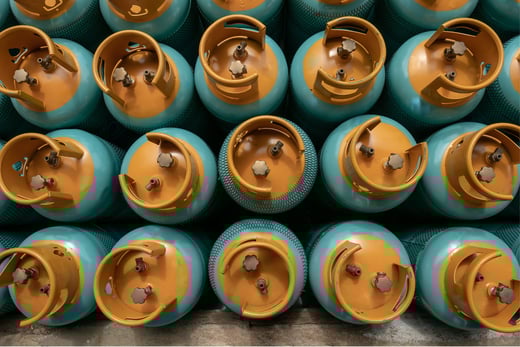
LPG distributors operate in a world where physical assets and profitability are tightly connected. Cylinders sit at the center of that relationship. They carry the product, shape the customer experience, and represent a major long-term investment.
Yet in many organizations, attention gravitates toward filling plants, route planning, and pricing, while the cylinder fleet quietly stays in the background. Over time, that “background” asset can become a hidden source of cost, operational friction, and missed opportunity.
Cylinders move through plants, depots, transport partners, agents, and customer sites. Small gaps in process and documentation at each site add up. Assets linger longer than expected, drift away from records, or slip out of visibility altogether without a single dramatic event.
Industry bodies see the same pattern at global scale. The World Liquid Gas Association (WLGA) notes in its Guide to Good Industry Practices for LPG Cylinder Management that LPG is “one of those unique products where the packaging often costs more than the contents,” and estimates there are roughly 1.5 billion LPG cylinders in circulation worldwide. In other words, the vessel itself is one of the most valuable assets in the LPG value chain.
The positive news is that this is changing. Real-world examples, such as Empresas Gasco in Colombia, show how LPG distributors can regain control of very large fleets, improve compliance, and boost asset productivity by modernizing cylinder tracking with platforms like TrackAbout.
Cylinders: A Strategic Asset Hiding in Plain Sight
On paper, LPG cylinders can look simple: they are purchased, filled, inspected, and eventually retired. In practice, they behave more like a distributed infrastructure that spans the entire supply chain.
Cylinders are durable and long-lived. With appropriate design, handling, and maintenance, they can stay in service for many years. The WLGA’s Report on the Testing and Requalification of LPG Cylinders looks at practices across 15 countries and highlights why this matters: those markets alone account for roughly 1 billion cylinders—about two-thirds of the estimated global population—with unit costs typically between $10 and $100 each.
The challenge is visibility. Many LPG organizations can answer high-level questions easily:
- How many cylinders were purchased last year?
- What is the book value of the fleet?
But they struggle with questions that really drive performance:
- Where are specific cylinders right now?
- How long have they been at this location?
- Are they moving, sitting idle, or at risk of being lost or scrapped early?
That gap between what is owned and what is actively managed is where value leaks out of the business.
How Loss Happens Quietly
Cylinder loss rarely looks like a single dramatic incident. It is more often the cumulative result of everyday operations. Along the way, common realities can chip away at control:
- Rough handling and storage. Cylinders may not be stored according to best practices. Over time, this leads to dents, coating failures, and premature scrappage.
- Uncontrolled exchanges and cross-filling. To keep customers supplied, agents and retailers sometimes swap cylinders across brands or refill “foreign” cylinders without a formal exchange process. Ownership becomes blurred, and assets drift into other networks with no clear record of where they went. The WLGA’s Guide to Good Industry Practices for LPG Cylinders in the Distribution Channel explicitly warns that multi-branded outlets and uncontrolled exchanges encourage “bad practices such as cross filling and illegal cylinder acquisition.”
- Extended dwell times. Cylinders can sit for long periods at low-volume customer locations, branches, or remote depots without active monitoring of dwell time or utilization. They still exist but effectively behave like lost stock tying up capital without generating revenue.
- Inconsistent record-keeping in the distribution chain. Third-party logistics providers and busy depot teams may not always scan or record every movement consistently, especially during peak periods. Cylinders move, but the digital trail is incomplete.
None of these situations look like a crisis on their own. Taken together, they gradually separate system records from what is happening in the field. Many cylinders remain physically in the network, but they stop functioning as part of a coordinated, productive fleet.
The Hidden Cost of Lost and Idle Cylinders
When cylinder visibility is limited, the impact shows up in several areas at once.
Direct write-offs and early scrappage
Each cylinder represents a real investment. When assets are lost, misdirected, or damaged beyond repair earlier than expected, that investment is cut short, and the revenue that cylinder could have supported across its life is reduced or lost.
In its Report on the Testing and Requalification of LPG Cylinders, the WLGA estimates that requalifying cylinders across the 15 study countries would cost nearly $1 billion per year over a 30-year period. Anything that shortens cylinder life or pushes assets out of controlled circulation makes that spend less effective.
Overbuilt fleets and frozen capital
Uncertainty about where cylinders are and how quickly they return often leads to a predictable response: fleets are expanded “just in case.”
Depots and branches carry extra stock to guard against shortages. Cylinders accumulate as insurance against gaps in information. This helps avoid stockouts but ties up working capital in assets that may not be working as hard as they could.
With better visibility, especially into dwell times and returns, LPG distributors can right-size fleets, rebalance stock across regions, and free capital for plant upgrades, technology projects, and growth initiatives.
Operational effort and friction
When cylinder counts do not align, people must bridge the gap. Teams invest time in:
- Reconciling spreadsheets and system reports.
- Investigating discrepancies across depots, plants, or customer sites.
- Organizing last-minute deliveries to cover unexpected shortfalls.
This is effort that could otherwise go into optimizing routes, supporting key customers, or improving safety programs.
Safety, quality, and compliance risk
Without a reliable view of each cylinder’s history, inspection status and condition are harder to monitor. Some operations risk keeping out-of-test or damaged cylinders in circulation longer than intended. Others choose to scrap assets early as a precaution and lose remaining useful life.
Across its cylinder-management and distribution-channel guides, the WLGA emphasizes that cylinders must be designed, maintained, and requalified to withstand daily handling, extremes of temperature, and long service lives and that poor handling or weak inspection practices can cut that life short. The quality of data behind those decisions is a critical part of safety and compliance, not just of asset management.
Why Traditional Tools Struggle
LPG distributors are not ignoring cylinder tracking. Most already use a mix of systems and processes, such as:
- ERP or route accounting systems.
- Warehouse and depot management tools.
- Shared spreadsheets and local databases.
- Paper logs, whiteboards, and informal trackers.
These tools are essential. They handle sales, billing, inventory, and financial reporting at an aggregate level. Where they often struggle is at the level of individual assets.
Common limitations include:
- Counts, not cylinders. Reports show how many cylinders should be at a location, but not which specific assets are there or how long they have been idle.
- Delayed updates. Movements are sometimes recorded at the end of a shift or week. By the time reports are produced, the picture may already have changed.
- Multiple versions of the truth. Operations, finance, and sales can each have separate records and assumptions, making reconciliation time-consuming and frustrating.
Traditional systems were never designed to follow every single cylinder from fill plant to customer yard and back again, capturing all the lifecycle events in between. That is where a dedicated cylinder tracking platform can add a powerful new layer of visibility and control.
From Blind Spots to Insight: What Modern Tracking Adds
Modern LPG cylinder tracking solutions are built to complement, not replace existing ERP and logistics tools. They focus on what happens to each cylinder in the real world and then feed that information back into the systems the business already relies on.
A typical approach includes:
- Unique identification. Each cylinder receives a durable barcode or RFID tag, giving it a permanent identity.
- Scan-based workflows. Teams scan cylinders at key events: filling, loading, delivery, return, testing, refurbishment, and scrap using handheld devices or smartphones.
- Real-time visibility. Locations, statuses, and histories are updated as movements happen, rather than days later.
- Asset-level history. Every cylinder builds a record over time: where it has been, how often it moves, when it was last inspected, and what issues were recorded.
This shift from estimated counts to asset-level insight changes the nature of decision-making. Instead of asking “how many cylinders should be here,” LPG distributors can ask, “which cylinders are here, how long have they been here, and are they doing the job they were paid for?”
Case in Point: Empresas Gasco
Empresas Gasco, Colombia’s leading LPG distributor, provides a practical example of what this looks like in the field. The company supplies LPG across diverse geographies and manages one of the largest cylinder fleets in the region.
As Colombian regulations raised the bar for traceability and audit-ready data, Empresas Gasco needed a way to maintain compliance while improving operational control. Early attempts with local software and manual tools could not provide a complete, real-time view of the fleet, particularly as the cylinder population grew.
Empresas Gasco selected TrackAbout as the backbone of its cylinder visibility and compliance strategy. Today, the company tracks around 1.5 million LPG cylinders in Colombia using TrackAbout, with a roadmap to extend coverage to approximately 2.5 million assets as the program expands. The platform is used to:
- Monitor asset movement between plants, depots, distributors, and end-customer locations.
- Record lifecycle events such as repairs, repainting, testing, and retesting.
- Analyze inventories, dwell times, and performance across regions and distribution partners.
- Detect patterns that indicate theft, unexplained losses, or unnecessary damage.
In higher-risk environments, Empresas Gasco’s teams use explosion-proof handheld devices; elsewhere, they use standard smartphones, both feeding data into the same central system. Leadership now works from a single, trusted source of truth about the LPG cylinder fleet, rather than stitching together partial records from multiple tools.
The result is stronger compliance, better control, and more productive assets. Regulators receive complete, audit-ready documentation on demand. Operations teams can see where cylinders are concentrated, how quickly they move, and where idle stock is building up. The fleet is healthier, more visible, and easier to manage.
Key Benefits of Dedicated LPG Cylinder Tracking
When distributors add a specialized tracking platform like TrackAbout on top of their existing systems, several benefits typically emerge.
- Stronger asset control
Organizations gain a clearer, more accurate view of their fleets: what they own, where it is, and how it is performing. This makes it easier to reduce unexplained shrink, identify underperforming routes or partners, and make more informed decisions about purchases and scrappage. - Better use of capital
With real-world data on circulation and dwell times, fleet size can be aligned with actual need rather than assumptions. Idle stock at plants and depots can be reduced, releasing working capital while still protecting service levels. - Fewer manual reconciliations
Scan-based workflows reduce reliance on spreadsheets and ad hoc counts. Teams spend less time resolving discrepancies and more time on initiatives that support customers, safety, and growth. - Improved safety and compliance
Up-to-date histories for each cylinder help organizations stay ahead of testing schedules, condition monitoring, and regulatory requirements. Safety, quality, and compliance teams can base decisions on data rather than incomplete records. - A better customer experience
With better visibility, LPG distributors can respond more quickly and confidently to questions about balances, deposits, and returns. Insight into where cylinders are sitting longer than expected also supports constructive conversations with distributors and end customers about improving circulation.
How TrackAbout Supports LPG Operations
TrackAbout is built specifically for companies that depend on high-value, returnable containers, including LPG cylinders. Its role is to provide asset-level insight and control that traditional systems cannot easily deliver on their own.
In LPG operations, TrackAbout typically:
- Assigns unique barcodes or RFID tags to each cylinder and ties them to a single source of truth.
- Provides mobile tools so filling plant teams, drivers, and depot staff can scan cylinders as part of their normal routines.
- Synchronizes asset data with ERP and route systems, so billing, inventory, and financial reporting reflect what is happening in the field.
- Delivers dashboards and reports that highlight theft, loss, idle stock, and utilization patterns across regions, distributors, and routes.
- Gives teams a simple, fast way to audit and update inventory at each customer site and location, while keeping a clear record of every inventory review.
By making the physical reality of the fleet visible, TrackAbout helps LPG organizations turn cylinder management from a blind spot into a controllable, optimizable part of the business.
Moving Toward a More Visible Fleet
Across the LPG industry, many organizations are reaching the same conclusion: cylinder fleets are simply too valuable to manage with partial information. The combination of high asset cost, long service life, stricter regulations, and complex distribution chains makes visibility essential.
By adding a dedicated tracking layer such as TrackAbout alongside existing ERP and logistics tools, LPG distributors can turn long-standing blind spots into sources of insight. Lost and idle assets become easier to find. Fleets can be sized with greater confidence. Teams spend more time on meaningful work and less time chasing numbers.
The Empresas Gasco story illustrates what this looks like in practice. The full case study provides a detailed view of how one leading LPG distributor strengthened compliance, improved traceability, and boosted asset productivity with TrackAbout. Read the case study.
For LPG organizations looking to close the gap between what is owned on paper and what is performing in the field, specialized cylinder tracking platforms like TrackAbout offer a practical, proven way to turn invisible loss into measurable value and to make everyday work easier and more rewarding for the teams who manage these assets.
Ready to get a clearer view of your cylinder fleet?
Talk with the TrackAbout team about your LPG network, see how other distributors are using asset-level data to reduce loss and improve utilization, and explore what a phased rollout could look like for your business. Request a demo to get started.



.png?width=300&height=170&name=Blog%20Feature%20Images-523x349%20px%20(2).png)
-1.png?width=300&height=170&name=Blog%20Feature%20Images-523x349%20px%20(1)-1.png)