Click any stage to explore simulation tools applied at each step
Gas production — simulation applications
After well-head, process & hydraulic simulations to estimate production rates and design robust systems.
Gathering and pipeline systemsMethane emissions estimationProduction rate estimationNGL separation designOperational scenariosCold-weather and low-throughput behaviorSingle and bi-phasic relief system design
Gas treatment — simulation applications
Simulation supports every step: condensate removal, dehydration, acid gas removal, nitrogen rejection, mercury removal, and fractionation.
Acid gas removal designDehydration optimizationFractionation designStartup/shutdown planningControl system tuning (CHEMCAD)
Liquefaction — simulation applications
The most simulation-intensive stage. Refrigeration cycle selection, compressor design, and safety analysis rely on both steady-state and dynamic models.
LNG system expansion surge analysis — CB&I (Impulse)CB&I used Datacor Impulse to confirm surge pressures stayed within allowable design limits during a 60% throughput expansion (100,000+ ft³/hr). Multiple post-expansion scenarios validated safe operation of the LNG transfer system between storage and the boil-off gas condenser.Read case study →
Maritime LNG — simulation applications
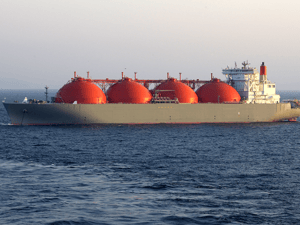
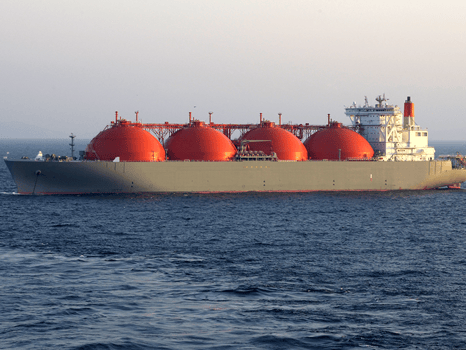
BOG management, cargo loading surges, and fuel-gas system control are key simulation targets. LNG carriers expected to exceed 2,000 vessels by 2029.
LNG carrier fuel-gas management — Azbil (CHEMCAD)Azbil and CHEMCAD developed a dynamic fuel-gas model integrated with the vessel's DCS, reducing commissioning time and validating BOG compressor control, anti-surge performance, and dual-fuel engine fueling logic prior to onboard deployment.Read case study →
LNG loading emergency shutdown: surge analysis research (Impulse)A research team at Lamar University used Datacor Impulse to model emergency shutdown cases and evaluate surge behavior across six scenarios, including five failure modes where components of the shutdown system malfunction.Read case study →
LNG storage and gas distribution — simulation applications
Cryogenic tanks require careful thermal and hydraulic modeling to manage BOG generation, rollover risk, and structural integrity under extreme cold.
BOG generation rate predictionTank thermal stratification modelingRollover risk assessmentTank capacity & inventory planningCooldown & warm-up procedure simulationPressure relief & flare load analysisPredictive BOG control (weather & schedule)
Case study
Dynamic simulation — high-pressure gas pipeline network, Tokyo Gas (CHEMCAD)Tokyo Gas operates a ~300 km high-pressure natural gas pipeline network fed from the Sodegaura LNG terminal. A dynamic CHEMCAD model was built and validated against live plant data to evaluate controllability when integrating a new pipeline segment and PCV at Souka station. Optimized PID parameters were pre-calculated using the IMC method, eliminating risky on-site manual tuning. Emergency closure scenarios confirmed automatic system stability across the full network.Read case study →
Regasification — simulation applications
Steady-state and dynamic models ensure stable terminal operation. Waste heat recovery and heating value control are key design priorities.
Heat exchanger network designWaste heat recovery integrationWobbe index & HHV inferential sensorsPressure control valve tuning (CHEMCAD)Pump trip & reverse flow analysisPID tuning in virtual environmentHeating value control under dynamic feed conditions
Case studies
Reverse flow risk elimination — CB&I LNG regasification plant (Impulse)CB&I identified reverse flow and air ingress risks after transfer-line pump trips. Redesigned with variable-speed pumps, eliminating unnecessary valves and enabling a simpler, more reliable control philosophy.Read case study →
Hybrid heating value control — LNG regasification terminal, Japan (CHEMCAD)City gas in Japan must meet a strict 45 MJ/Nm³ standard. A CHEMCAD dynamic model validated a hybrid measurement system combining a thermal conductivity calorimeter and a gas chromatographic calorimeter with 5-minute bias correction, confirming stable control under rapid feed changes.Read case study →
Power plant — simulation applications
Natural gas from regasification feeds power generation turbines. Datacor flow modeling tools have served this industry for 30+ years.
Fuel gas quality monitoring (HHV, Wobbe)Turbine inlet condition optimizationEmissions KPI tracking (CO₂ intensity)Cooling water system design (Fathom)EGT spread prediction in gas turbines (Arrow)Pump trip & startup transient analysis (Impulse)Gas pipeline transient pressure (xStream)Steam hammer force prediction (xStream)Turbine shutdown surge analysis
Case studies
EGT spread prediction — Rolls Royce Avon gas turbine (Fern Engineering · Arrow)Sonic choking modeled across 8 parallel fuel paths. Arrow predictions matched test rig data within 2% on flowrate and pressure, informing exhaust gas temperature spread and component lifespan.Read case study →
Gas turbine system reliability — Castlelost Flexgen 275 MW OCGT (Fingleton White · xStream)Fast load swings risked pressure spikes and turbine shutdowns. xStream modeled GNI regulator to Siemens turbines. All 4 scenarios met OEM and regulatory limits — transient fluctuations within ±1.5 bar.Read case study →
Combined heat & power cycle — Dradenau CHP Plant (ENKA · Fathom)180 MW electrical + 260 MW district heating in Hamburg. Fathom Scenario Manager handled 17 operating modes including waste heat from steel production, sewage, and incinerator. 17 heat exchangers and multiple turbine trip scenarios modeled.Read case study →
●Steady-state simulation●Dynamic simulation
The platform
Bring resiliency, safety, and profitability to your LNG projects
Simulate pressure drop and flow distribution for gas and steam piping systems. Analyze sonic choking and model non-ideal gases under varying operating conditions.
Bring Monte Carlo simulation to decision-making process. Build dynamic models of complex systems to forecast project performance under uncertainty. Use it to evaluate and compare alternative designs, construction sequences, and operational plans.
FERST powered by CHEMCAD makes designing or evaluating existing relief systems simple and more rigorous. Design vapor (tempered), gassy (non‑tempered), hybrid (tempered with gas generation), and non-reactive fire exposure systems (API 520/521, API 2000, OSHA 1910.106, NFPA 30).
Improve operational excellence
Improve process design by increasing throughput, using less energy, and running greener and safer over the entire LNG value chain.
Gain an edge in LNG production by exploring what simulation makes possible.
Enable virtual commissioning of facilities, train operators using dynamic models, screen alternative design before allocating CAPEX, and reduce field trial-and-error.
Model start-ups and shut-downs to review transient forces and water-hammer potentials. De-bottleneck plants under changing flow or composition conditions, plan for new tie-ins and brownfield expansions and run what-if scenarios.
Save energy by fuel gas optimization and efficiency studies throughout the entire value chain. Estimate methane emissions under real operating conditions and support for regulatory reporting & compliance.