The industry standard in automated SQC workflow
Eliminate manual Statistical Quality Control (SQC) processes and achieve full compliance with ASTM D6299, ISO4259-4, EPA Part 1090, and more.




_logo.svg)
Compliance Without the Complexity

Designed specifically for ASTM D6299, ISO 4259, and EPA Part 1090 workflow, fuels compliance, and reporting requirements.

Automates control charting, OOC documentation, audit preparation, performance monitoring, and QC material transitions.

Supports technicians, QC leads, lab managers, and corporate quality managers with role-specific workflows and dashboards.

Trusted by more than 140 labs, including fuel manufacturers, inspection companies, and the US EPA.
Compliance and reporting
ASTM D6299 workflow support
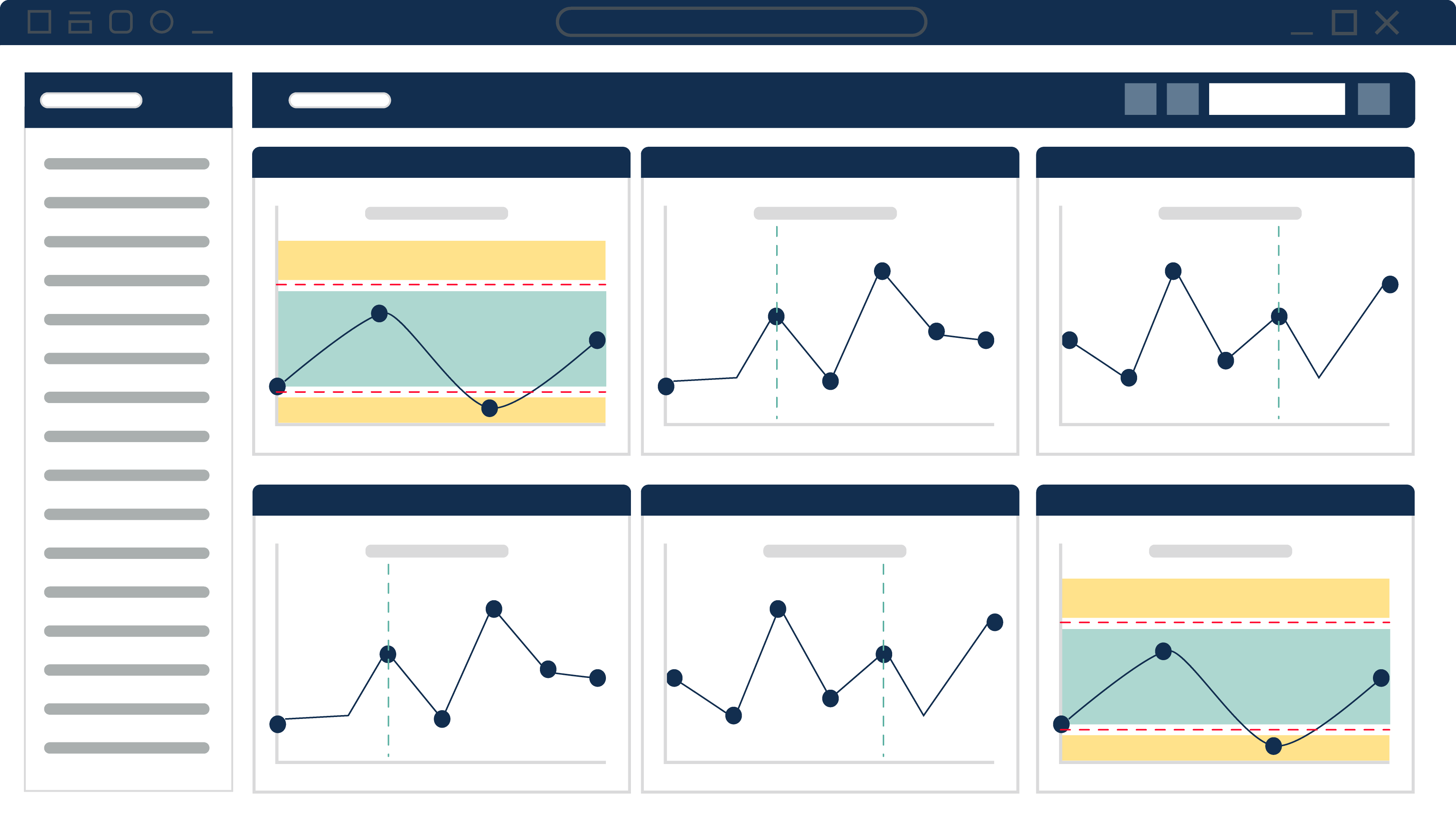
Precision I&MR Charts, Q-Charts, EPA 0.75R, and pretreated accuracy charts (Case 1 and Case 2) are built directly into the SQC+ workflow. Your team works within a structure that reflects the standard, reducing interpretation errors and ensuring consistent methodology across analysts and locations.

EPA Part 1090 reporting
SQC+ simplifies historic data export for EPA NSTOP and generates attestation reports without manual compilation. What typically requires hours of data gathering and formatting is reduced to a straightforward, repeatable process that holds up under regulatory scrutiny.
ISO 4259 compatibility
Control limit evaluation and update processes are aligned with ISO 4259 requirements. Labs operating under both ASTM and ISO frameworks can maintain a single, unified QC workflow rather than managing parallel processes or separate documentation systems.
Audit trail documentation
Every QC event, corrective action, user entry, and system change is recorded in a full, revisable audit database. When audits occur, your team is not scrambling to reconstruct records; the documentation is already complete and organized.
Workflow automation
Automated sample scheduling
QC samples are automatically logged and scheduled based on configured QC business logic, eliminating manual tracking and reducing the risk of missed or delayed samples. Lab personnel follow a consistent, system-driven schedule rather than relying on individual memory or manual coordination.

OOC alert notifications
Out-of-control signals trigger automated alerts delivered to responsible personnel via email or mobile device, 24 hours a day. QC leads are notified immediately when action is required, regardless of whether they are on the floor or off-site.
Corrective action workflow
When an out-of-control condition is detected, recheck samples are auto-logged and affected instruments are held from use until the corrective action workflow is complete. This prevents non-conforming results from passing through to product certification.
Control limit updates
Periodic control limit evaluation is guided by visual dashboard indicators, simplifying a process that often requires significant statistical expertise. SQC+ surfaces the data and context needed for informed decisions without requiring analysts to work outside the system.
Performance monitoring
Multi-site dashboards
Enterprise-wide dashboards provide a consolidated view of QC status across multiple labs, sites, or organizational units. Quality managers can identify performance gaps and trends at the site or enterprise level without requesting reports from individual locations.
Analyst performance tracking
Monthly, quarterly, and annual reviews compare site precision against individual analyst contributions and results. This data supports objective performance conversations and helps identify training needs before they become compliance issues.
Pareto analysis
Common causes of variation are identified and ranked across instruments, methods, and materials. This structured view of recurring issues allows QC teams to prioritize corrective action where it will have the greatest impact on lab performance.
Instrument capability monitoring
When deployed alongside BLISS, real-time instrument capability data is accessible within the LIMS. Instruments that fall out of control can be flagged to stop COA certification automatically, preventing non-conforming results from reaching the customer.




WHO WE SERVE
Trusted by labs across complex manufacturing environments.
SQC+ is built for industries where the cost of non-compliance, out-of-control instrumentation, and manual QC processes is measured in lost productivity and regulatory risk. It can be used in many industries.
Laboratory Solutions Resources
Explore More Resources


Request a demo today and take the first step toward a smarter, more efficient lab operation.