GMP

AgileDoc SLC

Lifecycle Documentation Built from Source Code.

AgileDoc SLC automatically generates complete, accurate system and product lifecycle documentation directly from control system source code, eliminating manual authoring and maintaining audit-ready compliance records.

  • Icon_AgileDoc

    AgileDoc generates design specs, configuration records, and SOPs directly from your control system source code. No manual assembly and no data entry between systems.

  • Icon_Security

    When systems change, AgileDoc scopes revalidation to affected sections only. What took weeks now takes days, cutting validation costs significantly.

  • Icon_QualityControl

    Your documentation stays current and audit-ready automatically. Every change is tracked with complete traceability, so inspection prep time collapses.


Trusted By

Every document you need. Exactly the way you need it.
Icon_DecisionMaking
Sequential and continuous logic

Icon_MES
Control and equipment modules

Icon_Flask Settings
Recipes, formulas, and unit configuration

Icon_Industry 4.0
Control diagrams in scalable graphic format

Manual Assembly from Scattered Data Sources

GMP documentation requires data from process control systems, MES systems, lab information systems, and other platforms. Teams manually copy this data into Word templates and spreadsheets by hand. This multi-step, error-prone process creates transcription mistakes and inconsistencies that should never reach your compliance record, yet they routinely do.
AgileDoc SLC-B

Post-Change Documentation Backlog

Every system upgrade, configuration change, or control strategy revision forces a complete documentation rebuild. Engineering teams spend weeks rewriting design specifications, configuration records, and SOPs manually. This documentation burden delays validation timelines and pushes projects off schedule by weeks or months.
AgileDoc SLC-B

Version Control Chaos Across Multiple Storage Points

Documentation versions scatter across shared network drives, email threads, backup systems, and physical binders. No single source of truth exists. When audit time comes, locating the correct version of every document and reconciling discrepancies across multiple storage locations consumes days of unplanned effort.
AgileDoc SLC-B

Scope Creep in Post-Change Validation

A minor configuration change should require revalidation of only the affected section. Instead, most facilities revalidate entire documents and systems after every change. This unnecessary scope expansion multiplies validation costs and extends timelines without improving compliance.
AgileDoc SLC-B

Transcription Errors Create Code-Document Drift

Without a direct, automated connection between the control system and documentation, data entry errors are inevitable. Over time, what the document says diverges from what the actual control system does. These discrepancies create audit risk and trigger expensive change control review cycles.
AgileDoc SLC-B

Audit Preparation Becomes a Last-Minute Crisis

Regulatory inspections require complete, organized, traceable records. Most facilities scramble in the weeks before inspection to locate documents, verify versions, and assemble proof of compliance. This reactive, manual approach creates stress and exposes compliance gaps that should have been caught long ago.
AgileDoc SLC-B

Direct Connection to Your Control Systems

AgileDoc SLC integrates directly with your process automation platforms, including DeltaV, Syncade, and other systems of record. The solution reads control strategy data, configuration parameters, recipes, and network topology directly from the source without manual intervention. Information flows from code to database in a single, automated step.

digital-transformation (8)

Documents Generated Directly from Current Configuration

When you need a design specification or configuration record, AgileDoc SLC queries the current system state and generates the document instantly. No template filling. No data copying. No manual authoring. The document reflects exactly what your control system contains at that moment.
digital-transformation (8)

Complete Audit Trail for Every Change

Every configuration modification is captured, versioned, and tracked automatically within AgileDoc's centralized database. The audit trail shows what changed, when it changed, who made the change, and who approved it. This complete traceability is maintained without file-based risk or manual record-keeping.
digital-transformation (8)

Regenerate Only the Sections That Changed

When a control system change occurs, AgileDoc SLC identifies which document sections are affected and regenerates only those sections. You do not rewrite entire specifications. This precision dramatically reduces post-change validation scope and accelerates the change implementation cycle.
digital-transformation (8)

Configurable Electronic Review and Approval Workflows

Documents route through structured, configurable workflows tailored to your site's compliance requirements. Multi-department review, electronic signatures, and approval gates are built into the process. All workflow steps are tracked and archived for regulatory compliance, including 21 CFR Part 11 requirements.
digital-transformation (8)

Secure Web Access for Your Entire Team

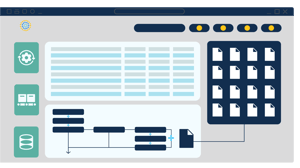
Authorized team members access AgileDoc SLC through a secure web portal to browse control strategies, inspect version histories, compare system configurations, and generate reports on demand. Engineering teams gain visibility into system documentation without requiring direct access to engineering workstations.
digital-transformation (8)

Output Formats That Match Your Site Standards

AgileDoc SLC generates documents in PDF, Word, or Excel format depending on your downstream requirements. Reports conform to your site's documentation standards for style, layout, and content structure. Output ranges from simple control diagrams to comprehensive step-action-transition descriptions.
digital-transformation (8)

Automated Source Code Extraction

AgileDoc SLC reads control strategy data directly from your process systems on a scheduled basis, capturing sequential and continuous logic, control and equipment modules, recipes, formulas, unit configuration, and physical network layout. Each upload is stored in a versioned object database that becomes the single source for every document the system produces.

iStock-2285647365

Incremental Change Detection

Each synchronization compares current system state against the prior version and identifies exactly what changed. Change control teams receive a precise inventory of modifications rather than a full system dump, which allows testing and validation planning to begin immediately after a configuration update.
iStock-2285647365

Pre-Configured Report Templates

The AgileDoc Standard Report Template Library provides Detailed Design Specification formats covering recipes, phases, modules, composites, unit classes, and control network configuration. Templates were developed with major GMP manufacturers and are configured to your site standards for style, structure, and content depth rather than built from scratch.
iStock-2285647365

Scoped Document Regeneration

When a system change occurs, AgileDoc SLC regenerates only the document sections tied to the affected objects. Teams revalidate the portion of the document that changed instead of reissuing and revalidating the entire specification, which keeps validation scope proportional to the actual change.
iStock-2285647365

Secure Web Client Access

Authorized users browse control strategies, inspect module relationships, compare configurations across systems, and generate reports on demand through a secure read-only web interface. Quality, validation, and IT teams gain visibility into system detail without requiring access to an engineering workstation.
iStock-2285647365

Structured Lifecycle Data Management

AgileDoc Elements maintains annotations, revision histories, and lifecycle metadata alongside generated documents in the same system. Contextual information that normally lives in separate trackers and spreadsheets stays connected to the document it describes.
iStock-2285647365

Multi-Format Output

Documents export as PDF, Word, or Excel depending on downstream requirements, including submission packages, internal review cycles, and import into existing document management systems.
iStock-2285647365

Add-on Modules

Engineering extension tools that can help you quickly and efficiently complete projects. Modules can work individually or together within Fathom and your existing Fathom models.

Settling Slurry

Models the effects of pumping fluids containing settling solids using the Wilson/GIW method. Used with either Fathom or Impulse.

Goal Seek and Control

Identifies input parameters that yield desired output values and simulates control functions. Used with either Fathom or Arrow.

Extended Time Simulation

Models dynamic system behavior in steady-state flow and how critical system parameters vary over time. Used with either Fathom or Arrow.

Automated Network Sizing

Evaluates the complex interaction of system variables to reveal combinations of cost savings. Used with either Fathom or Arrow.

Chempak Database

The Chempak add-on utility provides a thermophysical database of almost 700 liquids and 600 gases with mixing capability.

Pulsation Frequency Analysis

Helps identify pipe acoustical frequencies to avoid resonance from excitation, especially in systems with positive displacement pumps and reciprocating compressors. Used with either Impulse or xStream

Integrations

Read from the process systems already running on your floor, with no new infrastructure and no custom development.

Process Automation Systems

Read control strategies, modules, recipes, and configuration data directly from your process systems into a versioned object database.

Batch and Manufacturing Execution Layer

Capture recipe, phase, and unit configuration from batch execution and MES platforms so documentation reflects the full production picture.

Document Management and Quality Systems

Route generated documents into your existing document management or quality system in PDF, Word, or Excel without changing established approval paths.

Legacy and Custom Systems

No system is out of scope. Datacor builds connections against your installed base, including older platforms with no native export capability.

Potential Results

Explore Customer Stories
doc_blog
60-80% Time Reduction Documentation cycles compressed
digital-transformation (4)
100% Source Accuracy Documents match system configuration
digital-transformation (7)
50%+ Revalidation Reduction Post-change validation scope cut

FAQ

AgileDoc SLC integrates with your existing control systems and documentation processes without disruption, automating documentation generation immediately.

How does AgileDoc SLC integrate with our control systems?

AgileDoc SLC connects directly to your process automation systems, including Emerson DeltaV, Syncade, and other manufacturing systems. The integration reads control strategy data, configuration parameters, recipes, and network topology directly from the source system without manual intervention. Pre-built connectors for DeltaV and Syncade eliminate the need for custom development. Once integrated, AgileDoc SLC automatically ingests system data on a scheduled basis and tracks incremental changes.

What types of documents can AgileDoc SLC generate?

AgileDoc SLC generates the complete suite of system lifecycle documentation, including detailed design specifications (DDS), functional requirements specifications (FRS), configuration records, test scripts, procedure documentation, and network configuration diagrams. The system includes a Standard Report Template Library with pre-configured formats. Templates can be customized to conform to your site's specific documentation standards and compliance requirements.

How much time and cost does AgileDoc SLC actually save?

Customers typically reduce documentation generation time by 60-80%. A design specification that consumed weeks of manual authoring now generates in hours. Post-change revalidation effort drops by 50% or more because only affected document sections require revalidation, not entire systems. Over a multi-year period, the combination of time savings and revalidation cost reduction typically delivers a strong return on investment.

Is AgileDoc SLC compliant with 21 CFR Part 11 and other regulatory requirements?

Yes. AgileDoc SLC was designed from the ground up for GMP-regulated environments. The system supports electronic signatures, maintains complete audit trails, tracks version history, and provides change documentation required by 21 CFR Part 11. Documentation generated by AgileDoc SLC is audit-ready and defensible during regulatory inspections.

How does AgileDoc SLC handle system changes after implementation?

This is a core strength of AgileDoc SLC. When a control system change occurs, AgileDoc SLC automatically identifies which document sections are affected and regenerates only those sections. You do not rewrite entire specifications. This scoped approach dramatically reduces post-change validation scope and accelerates the change implementation cycle. Version control and change tracking are maintained automatically.

Can multiple teams use AgileDoc SLC at the same time?

Yes. AgileDoc SLC provides secure web access for authorized team members to browse control strategies, inspect version histories, compare system configurations, and generate reports on demand. Engineering, quality, validation, and IT teams can collaborate within the same system without requiring specialized workstation access. All access is logged for audit trail compliance.

How does AgileDoc SLC handle our existing documentation?

AgileDoc SLC can coexist with your current documentation library during transition. As you implement AgileDoc SLC, newly generated documents follow the automated approach while legacy documents remain accessible. Over time, you transition to AgileDoc SLC-generated documentation as control systems are updated. There is no requirement to recreate your entire documentation library upfront.

What is the typical implementation timeline?

Implementation timelines vary based on system complexity and customization requirements. Most implementations begin with connector setup and template configuration, followed by pilot documentation generation. Full deployment typically takes 3-6 months from start to production use. Datacor's implementation team guides you through each phase and provides training for your team.
Icon_AgileDoc Workflow

Request a demonstration to see how AgileDoc SLC generates your documentation in real time.
shutterstock_2220890709-scaled