GMP

SignalHub

SignalHub™ guides life science manufacturing teams through alarm and signal response workflows, automatically generating the traceable, audit-ready documentation that regulated environments require.
  • Icon_Efficient

    Stop relying on tribal knowledge. Every shift and site handles alarms the same way with one consistent, guided workflow. No more variation in response quality or documentation.

  • Icon_Workforce

    Stop scrambling before inspections. Every alarm becomes a complete, traceable, signed-off record automatically. Your audit file is ready the moment it closes.

  • Icon_ProductionEfficiency

    Stop rebuilding your infrastructure. SignalHub integrates directly with DeltaV, your MES, and document management system. No replacements. No custom development required.

  • Icon_Star

    InfoBatch reads natively from DeltaV, Syncade, AVEVA PI, LIMS, MES, and ERP without middleware or custom development. Your automation stays in place, your team owns the record configuration, and one reporting standard scales from a single manufacturing area to a global network.

  • Icon_Star check circle

    Stop spending hours documenting alarms. SignalHub cuts manual processing time by 90% and automates documentation, freeing your team to focus on root cause.

Trusted By

One automated system for collection, routing, and approval

Icon_Process
Alarm Collaboration

Standardizes how teams respond to, document, and close out critical events.

Icon_QualityControl
Signal Disposition

Guides operators through structured response workflows and automatically generates audit-ready records.
Icon_AI Monitor
Alarm Response, Documented

Connects to your process historian, groups related events, and delivers complete signed-off records.

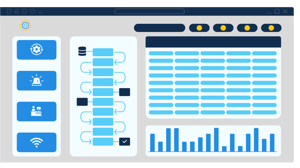
Automated Event Detection

Continuously monitors your manufacturing process and automatically pulls alarm and event data into the workflow. No manual data entry required to get started.
SignalHub-B

Role-Based Notification

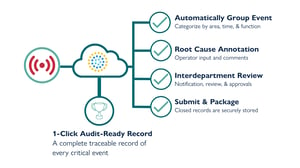
Automatically triggers notifications to initiate workflow actions and ensure a complete, timestamped record of who took action at the moment of the event.
SignalHub-B

Intelligent Alarm Grouping

Automatically associates related alarms to eliminate the time-consuming and error-prone task of manually sorting through dozens or hundreds of alarms per month.
SignalHub-B

Automated Alarm Pairing

Automatically matches each alarm trigger event to its corresponding acknowledgement event, creating accurate start-to-end pairs at scale without manual lookup.
SignalHub-B

Guided Disposition Workflow

Walks operators and quality teams through a predefined, step-by-step SOP from specifying root cause, to assigning alarms, to manufacturing and QA review.
SignalHub-B

Contextual Data Entry Forms

Digitize your existing forms and integrate them into the guided workflow.
SignalHub-B

Audit-Ready Reporting

Generates a complete InfoBatch report upon final QA approval that is organized, traceable, and ready for inspection. The report is available in your document management system.
SignalHub-B

Controlled Data Disclosure

Gives quality teams the ability to selectively publish only the information required for regulatory review, ensuring full internal traceability while protecting sensitive operational data.
SignalHub-B

Inconsistent response across shifts and sites

Operators rely on tribal knowledge and past experience to handle alarms. Response quality varies by shift, by person, and by site. What gets documented in one facility might be handled completely differently down the road, leaving your organization exposed to inconsistency and compliance risk.

shutterstock_1662043249-scaled-e1704836123355-1024x607

Related events scattered across separate records

When multiple alarms fire, they're treated as isolated incidents instead of being grouped under a single root cause. Your team spends time and attention sorting through dozens of individual alarm records, missing the connection that would speed resolution.
shutterstock_1662043249-scaled-e1704836123355-1024x607

Documentation pulled from memory, scattered across systems

Documentation happens after the fact, reconstructed from memory across paper logs, emails, and spreadsheets. Context is lost. Details are incomplete. Months later, when an auditor asks what happened, you're piecing together a story from fragments instead of pulling a complete record.
shutterstock_1662043249-scaled-e1704836123355-1024x607

Review and sign-off are informal and untracked

There's no structured workflow for who reviews, who approves, or when. Sign-offs happen in emails or handwritten notes. Traceability is weak. When an audit question arises, it's unclear who signed off on what or whether critical steps were actually completed.
shutterstock_1662043249-scaled-e1704836123355-1024x607

Audit preparation creates a scramble

Preparing for an audit means manual data gathering, version control issues, and gaps in documentation. You don't know if your records are complete until the auditor is already there. Compliance exposure grows quietly every day the process stays informal.
shutterstock_1662043249-scaled-e1704836123355-1024x607

Audit request, answered in minutes

A QA manager receives a compliance request for documentation on an event from six months ago. She pulls the complete, signed-off record directly from SignalHub without leaving her desk. Everything is there. Organized, traceable, ready to send. No scrambling through emails or paper files.
Signal-Hub-Infographic

Consistent response, every shift

A new operator comes on duty and encounters an alarm. She follows the exact same guided workflow as a ten-year veteran. No tribal knowledge required. No retraining. The process is the same whether it's the day shift, the night shift, or a weekend emergency.
Signal-Hub-Infographic

Root cause, not noise

An engineer receives an alert that forty related alarms have fired. Instead of reviewing each one individually, they're automatically grouped under a single root cause event. He can see the story in one place. Focus shifts from managing noise to solving the actual problem.
Signal-Hub-Infographic

No more paper trails

An operator responds to a signal and documents the event inline during the workflow. Context, root cause, notifications, all captured in the moment. No writing it up from memory two hours later. No scattered notes. The record is complete the moment the workflow closes.
Signal-Hub-Infographic

Shift handoff, nothing lost

The incoming shift picks up an alarm event and sees the full context already captured. Who was notified. What was checked. What the root cause was. No verbal briefing required. No information lost in the handoff.
Signal-Hub-Infographic

Sign-off without the chase

A QA manager needs to review and approve a completed record. Instead of tracking down paperwork across three departments or following up on emails, she reviews and approves everything in the system in one place. No chase. No delays.
Signal-Hub-Infographic

Six sites, one process

A plant manager deploys SignalHub across six facilities. Every site runs the same response workflow. Consistency across locations. No need for separate retraining initiatives or regional customizations. The process works the same everywhere.
Signal-Hub-Infographic

DMS, automatically updated

A completed, signed-off record is ready for your document management system. SignalHub sends it directly without anyone manually packaging or uploading it. It lands where it needs to be, organized and ready for audit.
Signal-Hub-Infographic

Add-on Modules

Engineering extension tools that can help you quickly and efficiently complete projects. Modules can work individually or together within Fathom and your existing Fathom models.

Settling Slurry

Models the effects of pumping fluids containing settling solids using the Wilson/GIW method. Used with either Fathom or Impulse.

Goal Seek and Control

Identifies input parameters that yield desired output values and simulates control functions. Used with either Fathom or Arrow.

Extended Time Simulation

Models dynamic system behavior in steady-state flow and how critical system parameters vary over time. Used with either Fathom or Arrow.

Automated Network Sizing

Evaluates the complex interaction of system variables to reveal combinations of cost savings. Used with either Fathom or Arrow.

Chempak Database

The Chempak add-on utility provides a thermophysical database of almost 700 liquids and 600 gases with mixing capability.

Pulsation Frequency Analysis

Helps identify pipe acoustical frequencies to avoid resonance from excitation, especially in systems with positive displacement pumps and reciprocating compressors. Used with either Impulse or xStream

Integrations

SignalHub connects to the tools you already use. Your process historian, your MES, your document management system.

Process Historians and Alarm Systems

Pull alarm and event data automatically from DeltaV, Honeywell, Siemens, and other process historians without manual data entry or custom scripts.

Document Management Systems

Send completed, signed-off records directly to Veeva, OpenText, SharePoint, or your existing DMS. No manual file transfers or packaging.

Manufacturing Operations Systems

Connect to your MES, ERP, and batch tracking systems to add production context to every alarm response and simplify handoffs.

Legacy and Custom Equipment

No system is out of scope. SignalHub builds connections to older equipment, custom applications, and any data source with API or file-based export capability.

Potential Results

Explore Customer Stories
shutterstock_648243124-scaled-e1704836392192-1024x608
40% Observations
shutterstock_alarm-scaled-e1704836164872
100% Defensible
iStock-2219130406
3X Site Visibility

FAQ

Answers to your specific questions about how SignalHub transforms alarm response and documentation.

How does SignalHub connect to our existing systems?

SignalHub integrates directly with DeltaV, MES platforms, and your document management system (Veeva, OpenText, etc.). We pull alarm data automatically from your process historian and send completed records directly to your DMS. No manual data entry or file transfers.

How long does implementation take?

Typical deployment is 8-12 weeks from contract to go-live, depending on your DMS integration complexity. We work with your IT and operations teams to minimize disruption. Many customers see value within the first month of deployment.

Is SignalHub 21 CFR Part 11 compliant?

Yes. SignalHub is purpose-built for regulated industries and meets all requirements for 21 CFR Part 11, including audit trails, electronic signatures, data integrity controls, and role-based access. Every record is complete and defensible for FDA inspection.

Do we have to replace our current alarm management system?

No. SignalHub works alongside your existing process historian and alarm infrastructure. We add the response workflow and documentation layer on top, without requiring you to change or replace your current equipment or data collection systems.

How much training do operators need?

Minimal. The guided workflow is intuitive, and most operators are productive within a few days. SignalHub is designed so a new employee can follow the same process as a 10-year veteran, eliminating reliance on tribal knowledge.

Where does our data live? Is it cloud or on-premises?

Both options are available. Many customers choose on-premises deployment for security and control. Cloud is available for organizations that prefer managed hosting. Data never leaves your network in on-premises mode.

What's included in the annual license cost?

The license includes the platform, integrations with your core systems, standard support, and quarterly updates. Professional services for implementation and custom configurations are separate. Training and change management support are included.

Can SignalHub handle all types of alarms, or just certain ones?

SignalHub handles any alarm or signal from your process historian, any equipment, any line. Whether it's a critical batch failure, unser intervention, or a minor sensor drift, every event follows the same structured workflow and generates the same audit-ready documentation.

What happens if we already have open compliance findings?

That's exactly where SignalHub delivers the most value. If you have open findings, using SignalHub immediately demonstrates to regulators that you've implemented a systematic solution to prevent recurrence. It strengthens your response and reduces re-inspection risk.

How do we measure success after implementation?

Key metrics include reduction in time per event, number of observations/findings avoided, audit preparation time, and operator satisfaction. Most customers see measurable improvements in the first 90 days and positive ROI within year one.
Icon_InfoETL

See how SignalHub cuts response time by 90% and automates your documentation.

shutterstock_alarm-scaled-e1704836164872