
Logistics: Free Live online webinar with Q&A
Date: November 4, 2026
Time: 2:00 pm EST
Register now
Biofuel producers are being asked to do more with less. Feedstock quality swings from one load to the next. Decarbonization targets keep tightening. Capital and energy budgets leave little room for error. Teams that scale bio-ethanol, biodiesel, and renewable diesel plants without a fast, chemistry-accurate simulator risk costly over-design, missed yields, and delayed start-ups.
There's a better way to design. Join us for Optimizing Biofuel Manufacturing Through Enhanced Process Design, a live CHEMCAD webinar, hosted by AIChE. You'll see how process simulation reveals the real chemistry behind fats, oils, and biomass, and how it turns that understanding into plants that run efficiently from day one.
This isn't a slide-only overview. You'll watch biofuel simulations built step by step in CHEMCAD, Datacor’s chemical process simulation software, covering biodiesel, renewable diesel, ethanol, biogas, and more.
Key takeaways
You'll leave the session knowing how to:
- Set up a realistic oil feed stream. Learn what fats and oils really contain, including triglycerides, free fatty acids, water, and soluble and insoluble phospholipids, and how to model a soybean oil feed for biodiesel or renewable diesel. With 125 possible triglyceride combinations from just five common fatty acids, getting the feed right is the foundation of an accurate model.
- Handle FFAs and pretreatment correctly. See why feeds with free fatty acids need esterification before transesterification, how phospholipids are removed, and how the fatty-acid profile affects biodiesel cloud point.
- Tell apparent kinetics from actual kinetics. Rocky will show how the patented STT® spinning tube-in-tube reactor cuts residence time from about 40 minutes in a conventional two-reactor Lurgi process to roughly 0.5 seconds, a reaction-rate increase of about 4,800 times, by removing mass-transfer limits.
- Compare biodiesel and renewable diesel routes. Understand how the same feedstock yields methyl esters and glycerin through transesterification, or n-paraffins and propane through hydrotreating, and how each process is built in CHEMCAD.
- Push ethanol past the azeotrope. Watch a stripper-rectifier train take a 6 vol% ethanol feed to about 95 vol%, then see what changes when a molecular sieve is added.
- Model advanced pathways. Get a look at biogas treating and upgrading, plus how to pull biomass data from the Phyllis database for gasification models.
Who should attend this webinar
If you design, run, or invest in renewable-fuel facilities, this session is for you. It's especially valuable for:
- Chemical process engineers who need to size equipment and perform heat integration to hit yield & purity targets.
- R&D/Pilot-plant engineers working to validate kinetics, scale up heat loads, and de-risk the move from lab to plant.
- Plant ops/production managers who want to do what-ifs, cut downtime, and tune recipes when feedstocks swing.
- Energy & utilities managers looking to optimize steam, power, and cooling networks to reduce BTU consumption.
- Sustainability/ESG directors who must quantify lifecycle emissions reductions and demonstrate compliance.
- Capital projects directors comparing design options, right-sizing CAPEX, and keeping schedules on track.
- Business development/project developers who need fast, process-grounded economics to support FID decisions.
The content applies across the industry, from corn and sugarcane ethanol plants and biodiesel producers using soy, canola, used cooking oil, or tallow, to renewable diesel and SAF facilities, biogas upgrading plants, and gasification and pyrolysis projects.
Meet your presenter
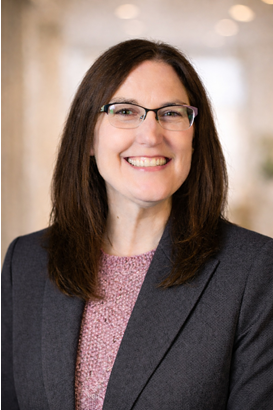
Rocky Costello, P.E., is a chemical engineer with more than 25 years of experience in the chemical process industries. He founded R. C. Costello & Associates, Inc. to bring innovative chemical and environmental engineering services, along with advanced and emerging process technologies, to the industry. His firm specializes in modular process plants for green energy, specialty chemicals, and plastics pyrolysis.
Rocky doesn't just teach simulation. He relies on it every day. As he puts it: every process flow diagram his firm produces starts in CHEMCAD.
Why simulation-first design matters
CHEMCAD empowers biofuel innovators to rapidly model, optimize, and scale renewable-fuel plants. That means maximizing yield, minimizing energy and CAPEX, and accelerating LCFS-compliant start-ups. Bio-optimized thermodynamics, user-defined components for FFAs and triglycerides, and built-in pinch analysis help teams hit targets the first time. Heat integration alone routinely trims 5–15% of steam and power demand.
Save your seat
Whether you're optimizing an existing plant or planning a greenfield project, this webinar will give you practical simulation techniques you can put to work right away. Bring your toughest questions for the live Q&A.
Register for the free webinar today
Frequently Asked Questions
Is the webinar free?
Yes. Optimizing Biofuel Manufacturing Through Enhanced Process Design is a free live webinar hosted by AIChE on November 4, 2026, at 2:00 pm EST. Registration is required. Register here.
Will a recording be available?
Yes. Everyone who registers will receive a link to the on-demand recording after the live session, so sign up even if you can’t attend live.
What’s the difference between biodiesel and renewable diesel?
Both are made from fats and oils. Biodiesel is produced by reacting the oil with methanol (transesterification), creating fatty acid methyl esters that are typically blended with petroleum diesel. Renewable diesel is produced by hydrotreating the oil with hydrogen, creating hydrocarbons chemically equivalent to petroleum diesel that can be used at 100% as a drop-in fuel.
What is a STT® reactor?
A STT® (spinning tube-in-tube) reactor is a patented continuous reactor in which a rotor spins at 500–5,000 rpm inside a stationary tube, separated by a 0.5–0.8 mm gap. The resulting Taylor vortices dramatically increase mixing and mass transfer, allowing biodiesel transesterification to finish in about half a second instead of roughly 40 minutes.
Do I need CHEMCAD experience?
No. The webinar is designed for engineers and technical leaders at any level of simulation experience. Rocky Costello, P.E., explains the underlying chemistry of each process before building the CHEMCAD simulation step by step, so attendees can follow along whether or not they use CHEMCAD today.